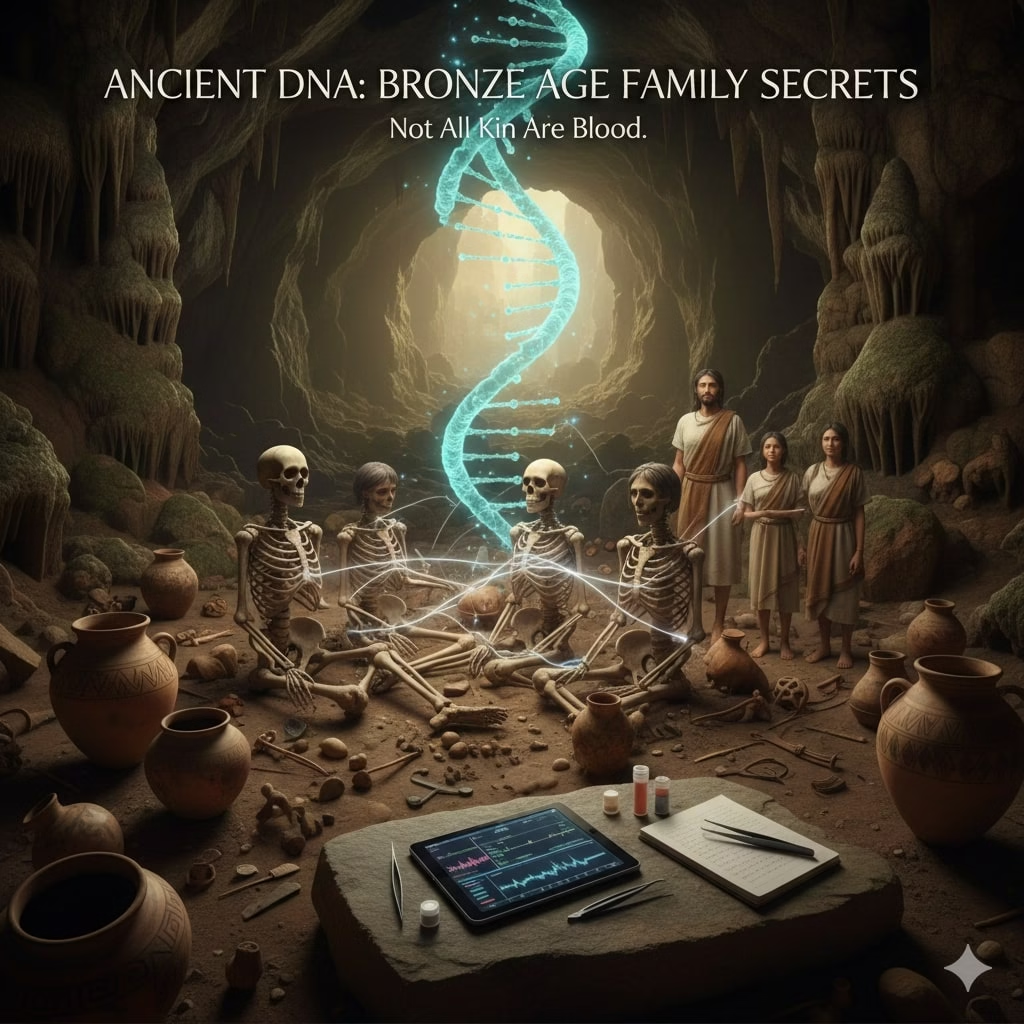
Recent research combining archaeology and genetics has uncovered surprising insights into the social lives of a Bronze Age community in northwestern Calabria, Italy. A study published in Nature Communications by scientists from the Max Planck Harvard Research Center for the Ancient Mediterranean and the University of Bologna has, for the first time, reconstructed the genetic and social profiles of individuals buried in the Grotta della Monaca cave. Their findings suggest that family in the Bronze Age was not always defined by biological relationships.
Genetic Analysis of Ancient Remains
The research team extracted ancient DNA from the skeletal remains of individuals buried in the cave approximately 3,500 years ago. Using advanced sequencing techniques, they were able to analyze both mitochondrial DNA (inherited from the mother) and nuclear DNA (inherited from both parents). This allowed them to determine biological relationships between the individuals.
Surprisingly, the results showed that not all individuals buried together were closely related. While some shared first-degree relationships (such as parent-child or siblings), others had no detectable genetic ties. This suggests that the burial group included non-biological members, possibly adopted individuals or those integrated into the community through social bonds rather than kinship.
Genetic evidence for social organization in the Bronze Age
These findings challenge the traditional assumption that prehistoric burial sites primarily reflect biological families. Instead, the data indicate that the Protoapennine community may have practiced a more inclusive form of social organization. Individuals may have been considered part of a family unit based on social roles, alliances, or shared responsibilities, rather than strict genetic descent.
The study also found limited genetic diversity among the individuals, suggesting that the community was relatively isolated. However, the presence of non-biological individuals in family style burials points to a society that valued social cohesion and integration.
Biological and Cultural Significance
From a biological perspective, this research highlights the power of ancient DNA to reveal hidden aspects of human history. It shows that genetic data can provide direct evidence of past social behaviors, such as adoption or non-kin cohabitation, which are not always visible in the archaeological record.
Culturally, the findings suggest that early human societies may have had flexible definitions of family and belonging. This adds to a growing body of evidence that prehistoric communities were socially complex and capable of forming strong interpersonal bonds beyond blood relations.
Final Analysis
The study of ancient DNA from the Grotta della Monaca cave offers a new perspective on Bronze Age life in southern Italy. It reveals that even in small, isolated communities, social structures could be diverse and inclusive. These insights not only deepen our understanding of the past but also remind us that the concept of family has always been more than just a matter of genetics.