A new scientific study by ancient DNA has looked at skeletons from a 2,500 year old cemetery in China. The findings show how unequal life was during the Eastern Zhou period (771–221 BC), especially between rich and poor, and between men and women. Scientists used DNA, proteins, and chemical clues in bones and teeth to uncover this hidden story.
Who Were These People?
The study looked at 32 skeletons from the Songzhuang Cemetery in Henan Province, in central China. These people lived during the Eastern Zhou period, a time of many small states, wars, and big differences between social classes. Some were rich nobles; others were buried as human sacrifices.
By studying their bones, teeth, DNA, and proteins, scientists could learn about their sex, diet, where they grew up, and even family ties.
Most Sacrifices Were Young Women
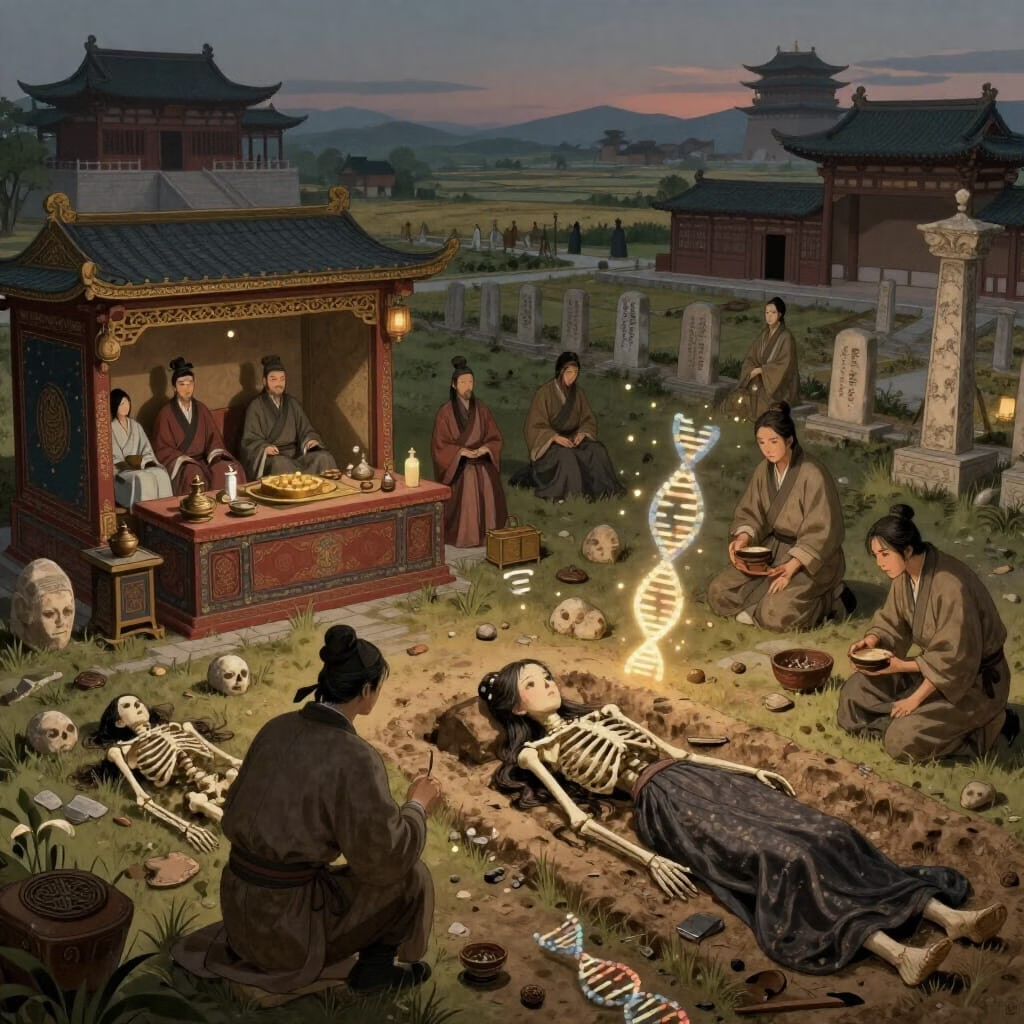
One of the most shocking findings was about the human sacrifices. Out of 26 people who were buried as sacrifices, 22 were young women. DNA and protein tests confirmed their sex.
These women were not buried like the nobles. They were treated as outsiders, likely brought in from elsewhere and killed to accompany the dead elite. This shows that women, especially young women, were among the most vulnerable and marginalized in this society.
(The image has been created using AI tools)
Rich Ate Better — Even as Children
Scientists measured chemical clues (isotopes) in bones and teeth to learn about diet. These clues show what kind of food people ate over their lives.
Nobles ate a rich diet: lots of meat and high-quality millet.
Sacrificial victims ate much simpler food, mostly basic plants and less protein.
Even more telling: the teeth of children show that this difference started very early. Rich kids grew up eating better food, while poor and sacrificed children had poorer diets from childhood. This means social class was already fixed by the time they were young.
Elite Families Were Often Migrants
By studying isotopes in tooth enamel, scientists could tell where people grew up. Many of the nobles were not local they came from far away.
DNA also showed that some noblewomen were related to at least one of the sacrificial victims. This suggests that elite families used marriage and family ties to keep their power and status, even bringing in women from other places to strengthen their position.
Rare Cases of Social Mobility
Despite the rigid class system, the study found a few rare exceptions. In one grave (M18), the teeth of two individuals showed that their diet changed during childhood. They started with a poorer diet and later began eating better food, like the nobles.
This is strong evidence that, in very rare cases, people could move up in society — a small sign of social mobility in an otherwise very unequal world.
What This Study Tells Us
This research combines archaeology, genetics, and chemistry to paint a detailed picture of life in ancient China. It shows: Deep social inequality between rich and poor. Harsh treatment of women, especially as human sacrifices. Diet differences that began in childhood. Elite families that moved around and used marriage to stay powerful. Very rare but real chances for people to improve their lives.
These skeletons from 2,500 years ago remind us that issues like class, gender, and inequality are not new they have shaped human societies for a very long time.
Want to Read the Original Study?
This blog is based on the paper:
Multidisciplinary analyses and ancient DNA reveal social inequality and mobility in the Central Plains during the Eastern Zhou period in China
Published in Nature Human Behaviour on 30 December 2025.