New study reshapes our understanding of how people and animals moved across the Pacific and how deeply that shaped island life. It is not just a story about pigs; it is a story about people, voyages, culture, and the long-term impact humans have had on ecosystems.
How Pacific Peoples Carried Pigs Across ocean
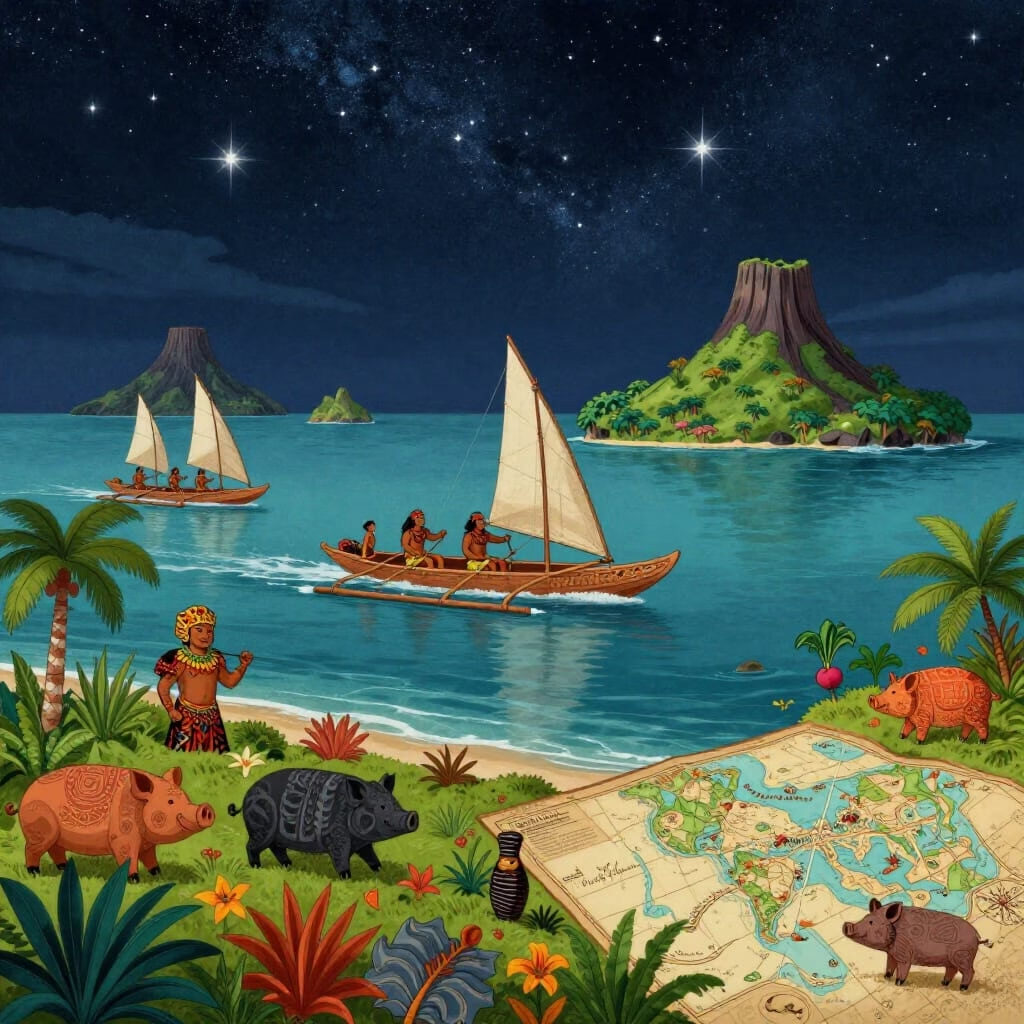
A major genetic study published in the journal Science has shown that Pacific people played a key role in moving pigs across thousands of kilometers of ocean over many centuries. These pigs were not just food; they were part of social life, rituals, trade, and even identity across islands from Southeast Asia to Polynesia.
Researchers analyzed the DNA of more than 700 pigs, including both modern animals and archaeological remains. By comparing their genomes, they could reconstruct where different pig lineages came from, when they arrived on specific islands, and how they later mixed with local or imported pigs.
This genetic “time machine” allowed scientists to map the spread of pigs alongside the expansion of Pacific seafaring societies, revealing a complex picture of repeated voyages, exchanges, and cultural connections.
The Team Behind the Discovery
The study was led by: Professor Laurent Frantz (Queen Mary University of London and Ludwig Maximilians University of Munich), Dr David Stanton (Cardiff University) and Professor Greger Larson (University of Oxford)
They worked with scientists from Indonesia, the Philippines, Vanuatu, and other regions, combining genetics, archaeology, and history. This kind of collaboration is crucial when trying to reconstruct a story that spans thousands of years and thousands of kilometers of ocean.
Pigs as Partners in Voyaging and Settlement
Pigs did not travel by accident. They were deliberately carried on canoes and boats as Pacific peoples explored and settled new islands. Along with crops and other domesticated species, pigs formed part of a portable “toolkit” for life in new environments.
On many islands, pigs became, key source of meat and fat Central to feasting and social exchanges. Important in rituals, ceremonies, and status displays. A driver of environmental change, as they rooted in soil and fed on local plants
By following pig DNA, the researchers could indirectly follow human movements. Different pig lineages match different migration routes and settlement phases, indicating multiple waves of travel and contact between island groups.
Crossing the Wallace Line: Challenging an Old Barrier
For a long time, scientists believed that many animals could not cross a major biogeographical boundary called the Wallace Line. This invisible line runs between Bali and Lombok and northward between Borneo and Sulawesi, separating Asian wildlife from Australasian species.
Naturally, species like tigers, elephants, and many forest mammals do not cross this deep-water boundary. But humans, with boats and planning, can. The new pig DNA evidence shows: Pigs linked to Asian lineages did cross the Wallace Line but with human help. These transported pigs then spread further east, reaching island chains that were never connected to the Asian mainland by land bridges. The idea of the Wallace Line as an absolute barrier does not hold when you include human-mediated animal movement.
In other words, the Wallace Line remains a powerful concept for natural dispersal, but this study underscores how human voyagers effectively rewrote the biogeography of the region by carrying animals with them.
A Complex History of Mixing and Movement
By comparing genomes from hundreds of pigs, the scientists could see that: Different islands hosted distinct pig lineages, reflecting their original sources in Southeast Asia. Over time, later voyages brought in new pigs that bred with existing populations, creating mixed genetic signatures. Some pig populations preserve very old genetic lineages, acting as “living archives” of ancient migration events.
This pattern of movement and mixing matches what archaeologists and linguists have argued about Pacific people: they did not simply move once and stop. There were repeated journeys, ongoing contact, trade, and cultural exchange over many centuries.
Cultural and Ecological Impacts Across the Pacific
Moving pigs across the ocean had lasting consequences far beyond food supply: Cultural roles: In many Pacific societies, pigs became symbols of wealth and status, central to bridewealth, gift exchange, and ritual events. Pigs can heavily disturb soil and vegetation. Over generations, they contributed to shifts in plant communities, forest regeneration, and even erosion in some places. Introduced pigs sometimes competed with or preyed on native species, adding to pressure on fragile island ecosystems already reshaped by human settlement.
This research highlights how tightly connected culture and environment are. Human decisions about which animals to carry and where to release them have echoing effects on ecology, social systems, and even future scientific debates.
Why This Study Matters Today
Understanding how pigs moved with people across the Pacific helps us: Reconstruct the history of Pacific navigation, settlement, and cultural networks. Rethink long-held ideas like the strictness of the Wallace Line. Recognize that human influence on ecosystems has deep, ancient roots not just industrial-era impacts. Inform present-day conservation and livestock management, especially when trying to identify and protect unique local breeds or lineages.
By reading history in the DNA of pigs, this study gives us a more detailed and dynamic picture of the Pacific’s past one where people, animals, cultures, and environments co-evolved across one of the largest expanses of ocean on Earth.