Ancient DNA Pushes Syphilis Lineage Back 5,500 Years
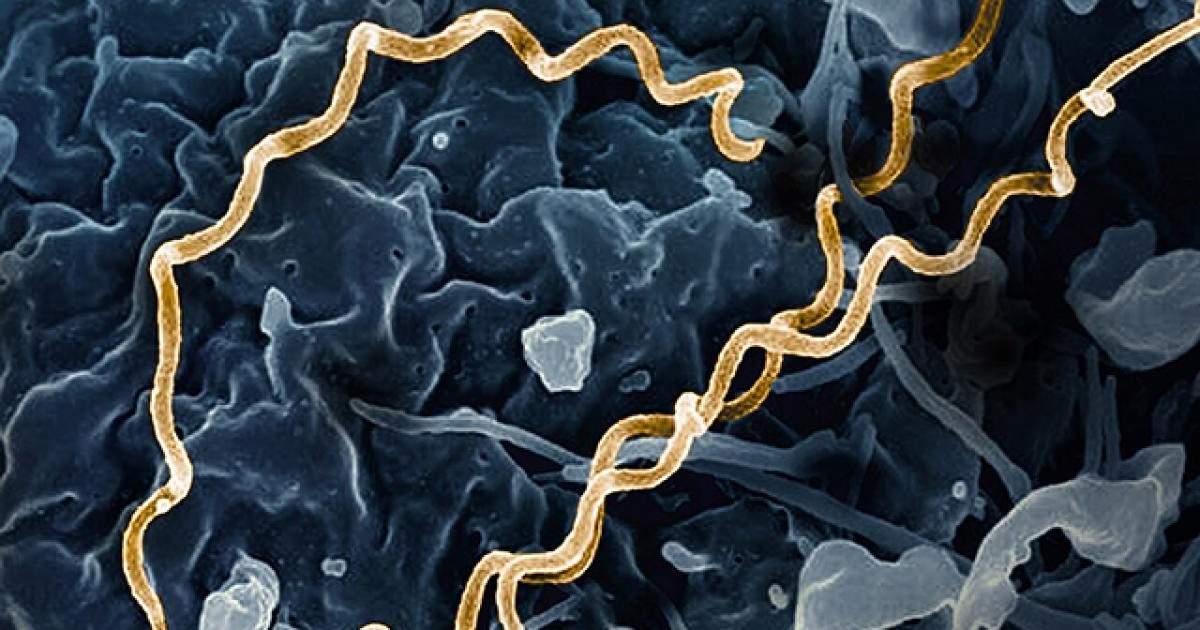
Ancient DNA analysis from a 5,500-year-old skeleton in Colombia has revealed the oldest known genome of a Treponema pallidum relative, rewriting the timeline of syphilis origins. This discovery extends the pathogen’s genetic record by about 3,000 years and challenges assumptions tying its emergence to agriculture and population density. The findings appear in the journal Science.
Discovery Details
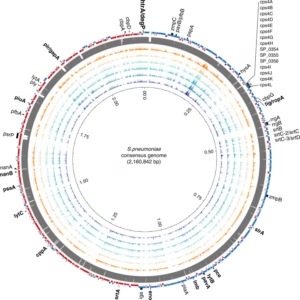
Researchers extracted DNA from a long bone fragment of a hunter-gatherer individual buried at the Tequendama I rock shelter in Colombia’s Sabana de Bogotá region around 3500 BCE. Despite no visible skeletal signs of disease, the sample yielded ~78.5% of a T. pallidum genome labeled TE1-3. This ancient strain represents a distinct branch that diverged before modern subspecies like those causing syphilis, yaws, and bejel, carrying all 59 known virulence genes.
Implications for Origins
The genome indicates T. pallidum ancestors infected humans as early as 13,700 years ago, possibly during the last Ice Age, predating farming in the Americas. This suggests treponemal diseases arose in small, mobile hunter-gatherer groups under specific ecological conditions, not just crowded agricultural societies. It reframes syphilis evolution as tied to localized biosocial factors rather than solely globalization or urbanization.
Historical Context
Prior studies found T. pallidum DNA in 2,000-year-old Brazilian remains and other ancient American samples, confirming pre-Columbian presence but with less complete genomes. The gap to 5,500 years resolves a key timeline hole, showing deep antiquity in the Americas without reliance on European contact theories.
Future Research Avenues
Additional ancient genomes could clarify transmission modes, like when sexual transmission evolved, and trace global spread. The study urges reducing stigma by viewing syphilis through evolutionary and ecological lenses to improve public health responses. Phylogenetic models estimate the common ancestor at 7,000–20,500 years ago, opening doors to Ice Age pathogen studies.