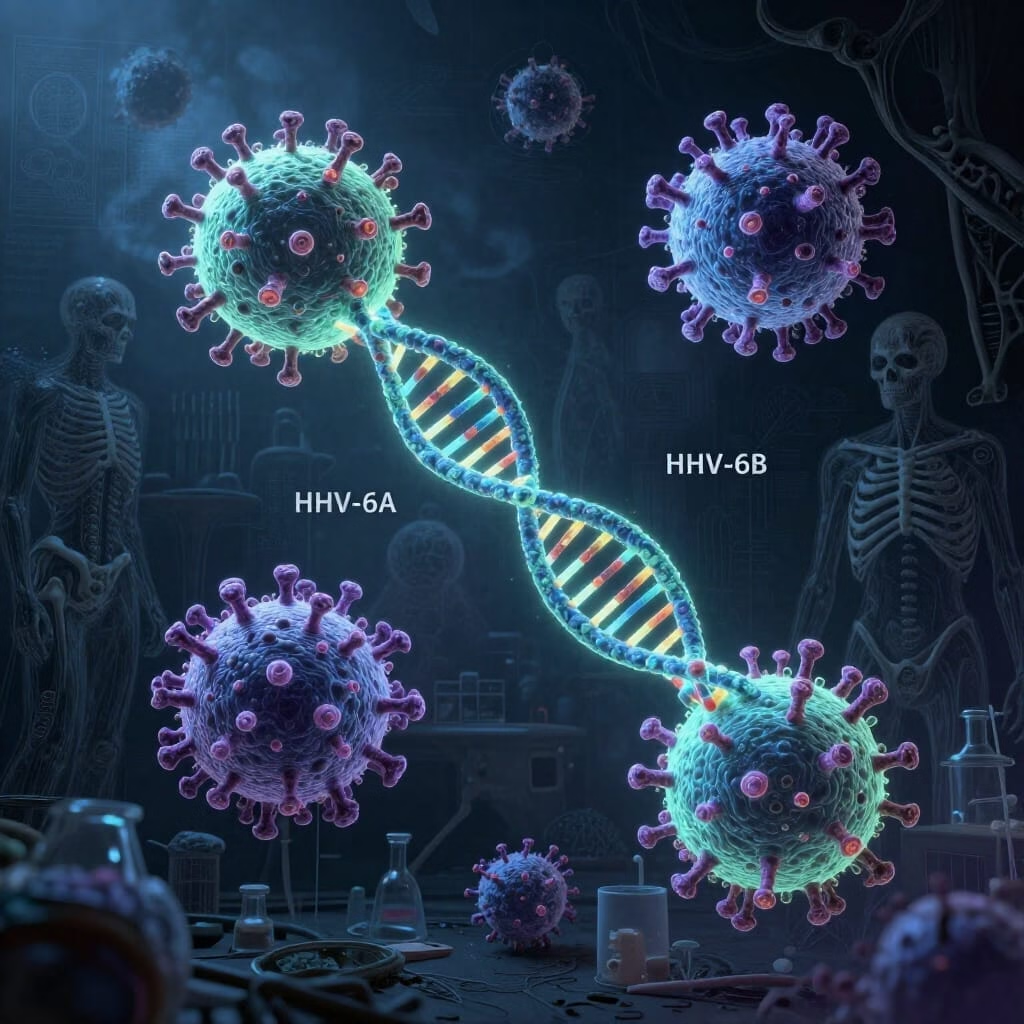
Human beta herpesviruses 6A and 6B, known as HHV-6A and HHV-6B, are viruses that infect most people and can embed into human DNA. A new study recovered ancient DNA from old bones to trace these viruses back over 2,500 years. The findings show they’ve evolved alongside humans since ancient times.
What Are HHV-6A and 6B?
These viruses cause “roseola” or sixth disease in kids, with fever and rash. They spread easily and hide in the body lifelong. HHV-6A and 6B can integrate into chromosomes, passing from parent to childlike genes.
The Big Discovery
Scientists from the University of Vienna and Tartu analyzed 4,000 ancient skeletons across Europe. They rebuilt 11 full or partial virus genomes from remains dated 1100-600 BCE up to the 1400s CE. The oldest came from an Iron Age girl in Italy.
Tracing Virus Evolution
Much of today’s HHV-6 variety existed by the 14th century. Ancient viruses match modern ones closely, proving long-term continuity. HHV-6B integrated into DNA as early as the 1st-7th centuries CE from old founder events.
Key Differences Between Types
HHV-6A lost its ability to integrate into DNA early, unlike HHV-6B. Only about 1% of people inherit integrated versions today. This shows the viruses adapted differently over millennia.
Why It Matters
These viruses are truly ancient human companions, not new from the 1980s when first found. Future studies can hunt more old genomes to fill gaps. The work highlights how viruses shape our DNA history.