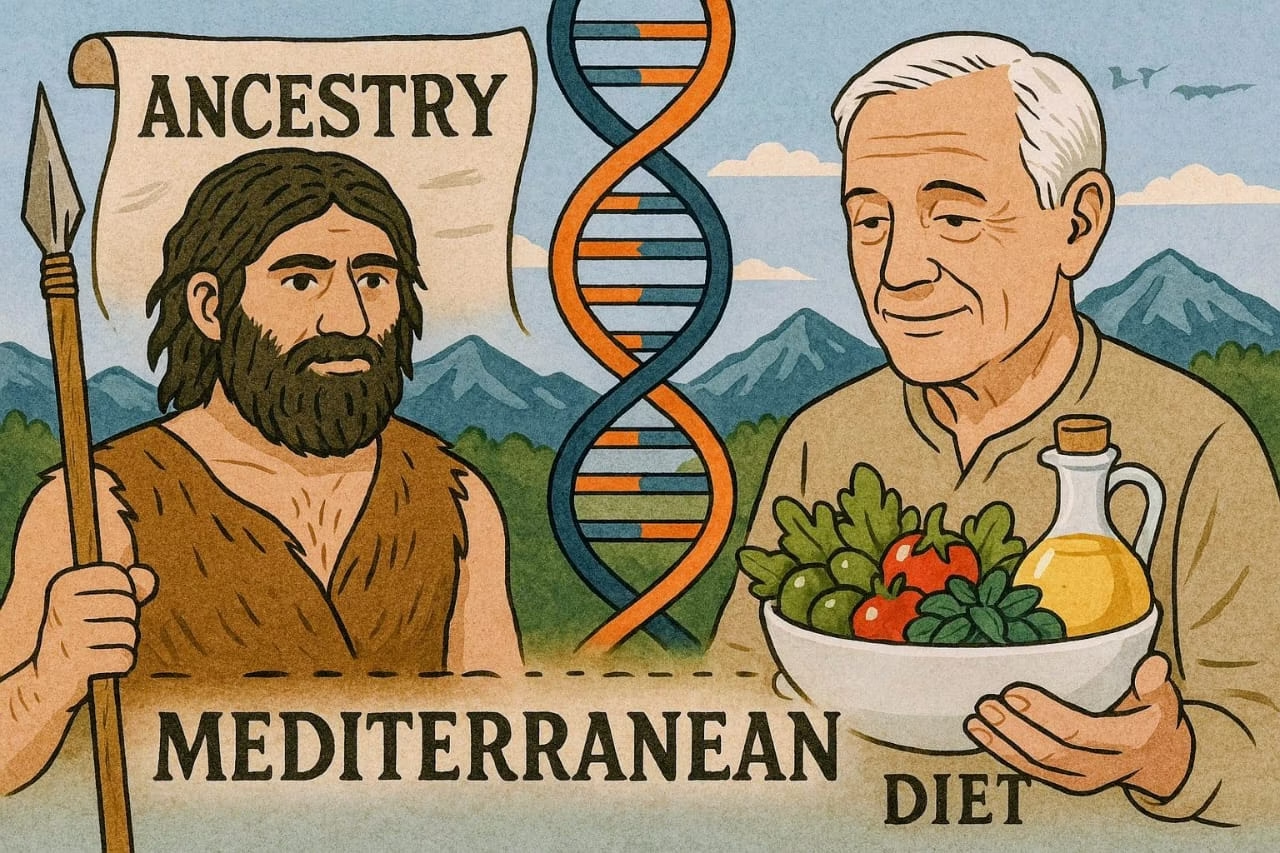
For a long time, everyone thought the “Mediterranean Diet” (healthy food like olive oil and fish) was the only reason Italians lived so long.
But in December 2025, scientists found a new secret. It turns out that living to 100 isn’t just about the food on the plate—it’s hidden in their DNA. This “recipe” for a long life was actually written 14,000 years ago. It comes from ancient ancestors who survived the freezing Ice Age in Italy. Their survival skills from a long time ago are helping people stay healthy today
A landmark study published in GeroScience by researchers at the University of Bologna has identified that the secret to reaching age 100 may lie in the genetic legacy of the Villabruna cluster.
Who was the Villabruna Cluster?
To understand the science, we have to look at the timeline. About 14,000 to 19,000 years ago, as the Last Glacial Maximum (the peak of the Ice Age) began to retreat, a specific group of Western Hunter-Gatherers (WHG) re-expanded across Europe.
The “Villebrun” individual—a skeleton found in a rock shelter in the Italian Alps—is the genetic “poster child” for this group. These were the ultimate survivors. They possessed a biological toolkit designed for extreme environmental stress, high-intensity physical activity, and wildly fluctuating food sources.
The Statistics of Survival
The study compared the genomes of 333 Italian centenarians against a control group of 690 healthy younger adults. The findings were staggering: The 38% Rule: For every “standard deviation” increase in Villabruna-related DNA, a person’s chance of reaching 100 years old jumped by 38%. The Sex Gap: This genetic advantage was significantly more potent in women. Female centenarians were found to have a much higher concentration of these ancient alleles compared to their male counterparts.
Unique Enrichment: While all modern Italians are a mix of Hunter-Gatherers, Neolithic Farmers, and Bronze Age Steppe nomads, only the Hunter Gatherer component showed a positive correlation with extreme longevity.
The Biological Mechanism: Metabolism vs. Inflammation
Why would “Caveman DNA” help you survive in the 21st century? The researchers point toward a concept called “Inflammaging.”
The Neolithic Trade-off
When the Neolithic Farmers arrived around 6,000 years ago, they brought agriculture and livestock. This transition introduced new infectious diseases. To survive, the human immune system evolved to be “hyper-reactive.” This helped our ancestors survive plagues, but it has a modern downside: it leads to high levels of chronic inflammation in old age.
The Hunter-Gatherer Advantage
The Villabruna cluster, however, carried genes optimized for: Metabolic Efficiency: Their bodies were tuned to process energy without creating excessive cellular waste (oxidative stress). Robust Immune Quiescence: Unlike the “jumpy” immune systems of the later farmers, the Villabruna genes appear to promote a more stable immune response, protecting the body from the self-inflicted damage of chronic inflammation.
Genetic “Painting”: Finding the Pro-Longevity SNPs
The team used a technique called “chromosome painting” to identify the specific locations (SNPs) on the human genome where these longevity markers live. They found that centenarians didn’t just have more ancient DNA; they had it in the right places specifically at sites that regulate insulin sensitivity and cellular repair.
“We are seeing a ‘historical-genomic’ reframing of aging,” says the study’s lead author. “Longevity isn’t a static trait; it’s a dynamic result of how our ancient history interacts with our modern environment.”
Why Italy?
Italy acts as a “genetic refugium.” Because of its mountainous geography and peninsular shape, certain pockets of the population (like those in the mountain villages of the South or the islands) maintained higher concentrations of the Villabruna lineage. These areas aren’t just “Blue Zones” because of the food; they are sanctuaries of ancient genetic resilience.
The Villabruna cluster reminds us that our bodies are living history books. While we cannot change our ancestry, understanding this “Ice Age Shield” helps scientists develop new treatments for age-related diseases by mimicking the metabolic efficiency of our hunter gatherer forebears.