Imagine living in one of the coldest places on Earth northeastern Siberia, where winter temperatures plunge below -50°C (-58°F). The Yakut people, also known as Sakha, have called this frozen landscape home for centuries. They left behind a rich archaeological record of their lives. But in 1632, Russian explorers arrived, bringing cereals for farming, deadly diseases, Christianity, and massive cultural upheaval. What happened to the Yakut’s biology their genes and even their mouth bacteria during this conquest? A new study using ancient DNA cracks open that mystery.
Yakut Roots: A Mix of Locals and Mongol-Era Migrants
Scientists analyzed DNA from ancient Yakut skeletons and compared it to modern samples. The story starts long before Russians showed up. The Yakut trace their origins to local Siberian hunter-gatherers who mixed with groups from Trans-Baikal (near modern-day Mongolia). This admixture happened around the time of the Great Mongol Empire in the 13th century, when people migrated across vast steppes.
Fast forward to the Russian era: Despite centuries of conquest, the Yakut gene pool stayed remarkably stable. No big waves of European DNA flooded in. Their oral microbiomes the bacteria living in their mouths also held steady, showing continuity in diet and lifestyle.
Surprising Stability Amid Conquest and Smallpox
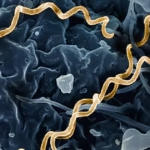
The study found the Russian impact was biologically minimal. Yakut communities kept their core ancestry intact, even as Russians introduced new crops and religions. One twist: Smallpox. DNA revealed strains circulating in Yakutia by around 1650 different from those in Europe at the time. This suggests the disease hit Siberia via unique paths, perhaps from Asia, devastating communities before vaccines existed.
Family Ties, Shamanism, and Low Inbreeding
Yakut marital practices helped preserve this stability. Most people avoided close-relative marriages, keeping inbreeding low and genetic diversity healthy. But there was an exception: A woman buried with the latest signs of traditional shamanism (spiritual rituals pre-Christianity). Her DNA showed she was the daughter of second cousins still close enough to stand out.
This paints a picture of cultural resistance. While Christianity spread, some held onto old beliefs, and their genes tell the tale.
What This Means for History
This DNA study shows that the Yakut people were very strong. Even after Russian conquest, they kept their genes and way of life. They did not become like the Russians in body, even though life changed a lot.It is a story of survival in the coldest place on Earth.
The study, published in Nature, draws on tons of new data from skeletons and modern Yakut people. Check it out here for the full science. In a world of migrations and invasions, the Yakut remind us: Sometimes, the deepest changes are the ones that don’t happen.