-
Ancient DNA Shows How Unequal Life Was in Eastern Zhou China
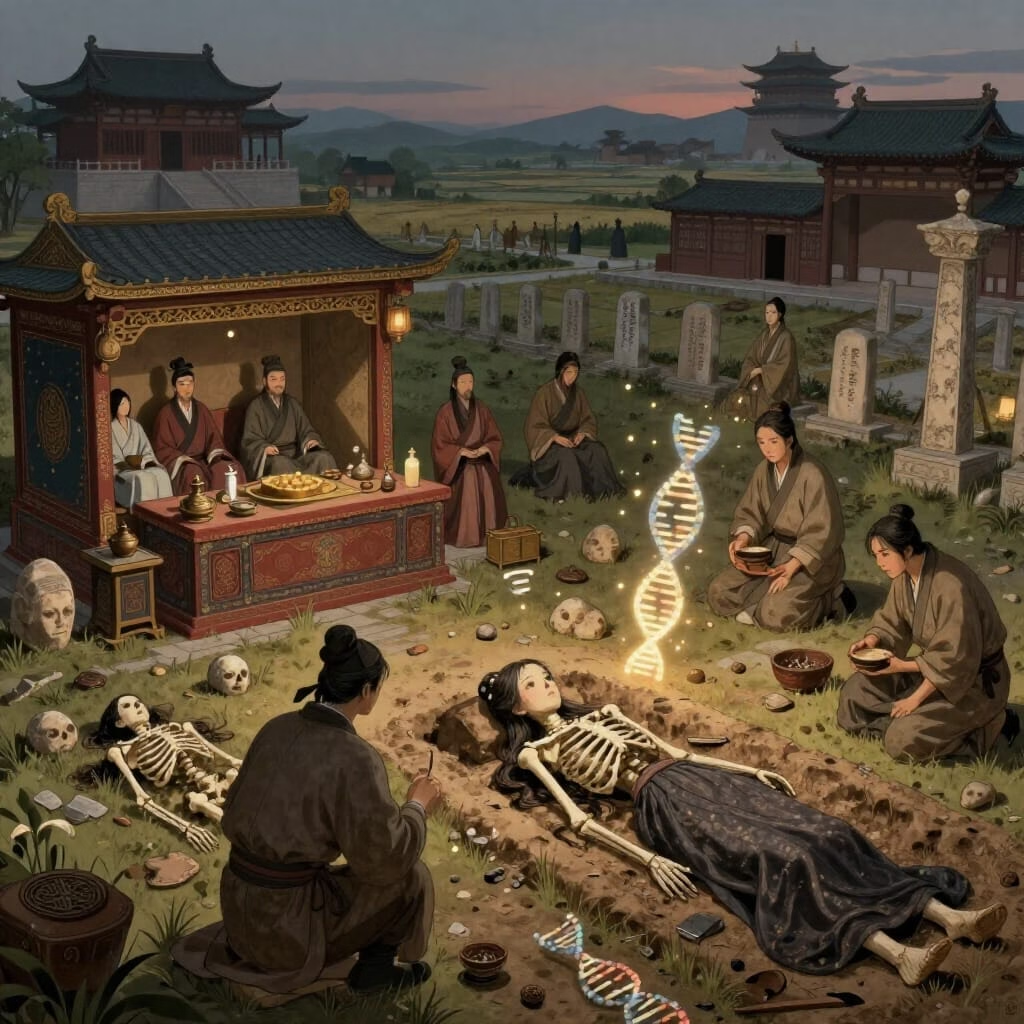
A new scientific study by ancient DNA has looked at skeletons from a 2,500 year old cemetery in China. The findings show how unequal life was during the Eastern Zhou period (771–221 BC), especially between rich and poor, and between men and women. Scientists used DNA, proteins, and chemical clues in bones and teeth to…
-
Ancient DNA Reveals Complex Family Structures in a 3,500-Year Old Bronze Age Community
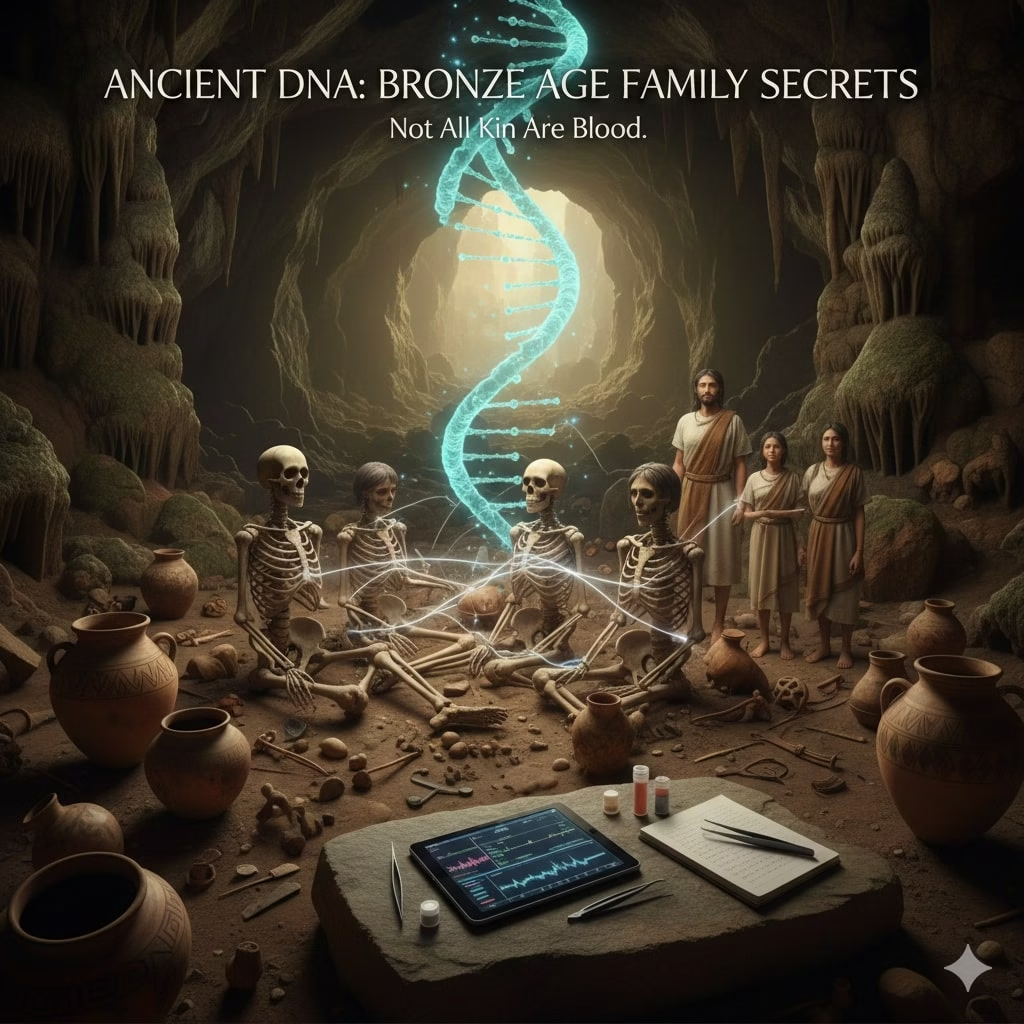
Recent research combining archaeology and genetics has uncovered surprising insights into the social lives of a Bronze Age community in northwestern Calabria, Italy. A study published in Nature Communications by scientists from the Max Planck Harvard Research Center for the Ancient Mediterranean and the University of Bologna has, for the first time, reconstructed…
-
The Vanished People of Bogotá: Secrets from 6,000-Year-Old DN
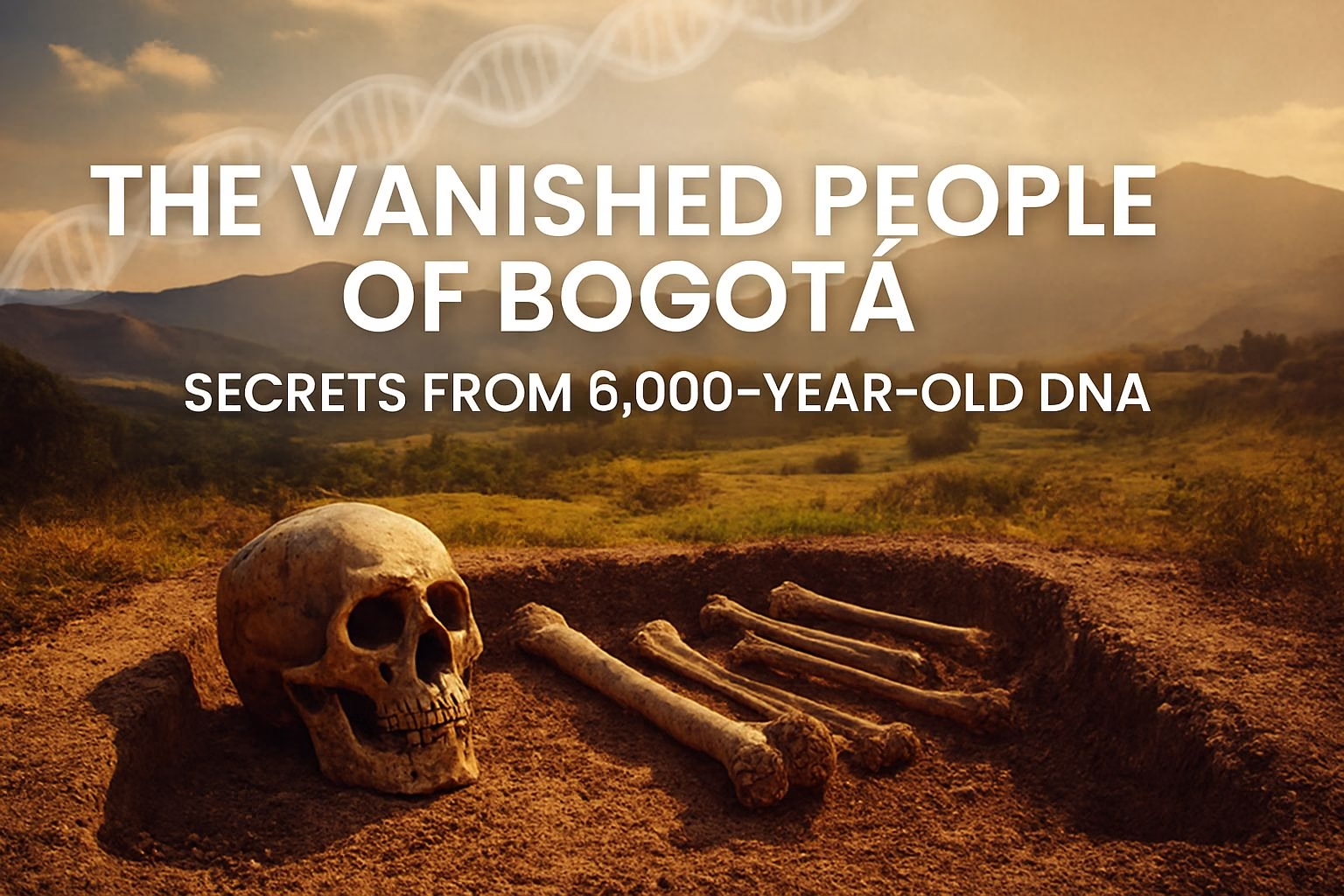
A new study has uncovered a lost group of ancient humans near Bogotá, Colombia. Scientists looked at old bones and found their DNA tells a surprising story. This “ghost lineage” lived 6,000 years ago but left no family behind in today’s people. It’s a big find that changes what we know about early humans…
-
Hippos in Ice Age Europe? Ancient DNA is Rewriting Our Wildlife History
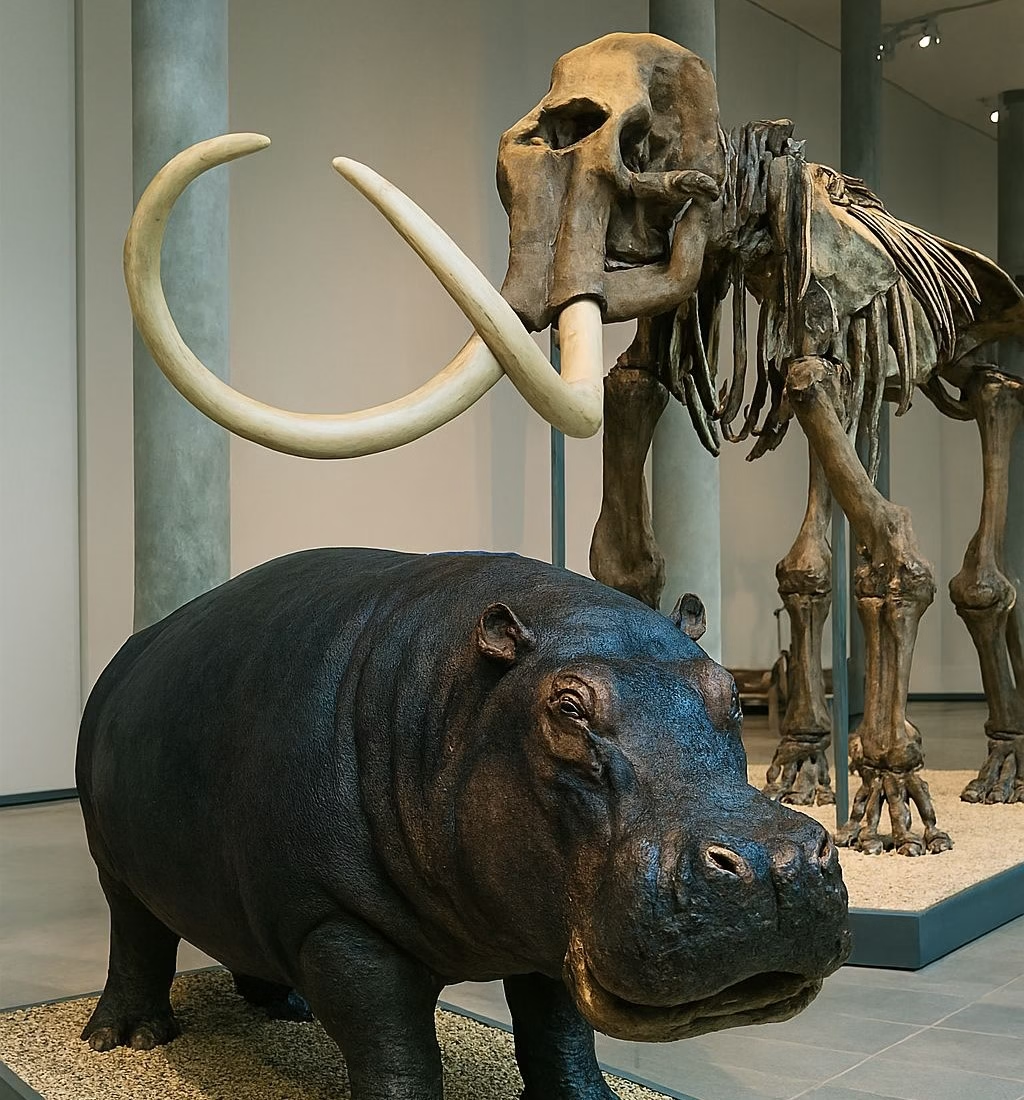
You might be surprised to learn that hippos once lived in Europe not just during warm periods, but right in the middle of the Ice Age! But new research turns that idea on its head. Scientists have discovered that hippos lived in Germany’s Upper Rhine valley between about 49,000 and 31,000 years ago…
-
From Ancient DNA to AI: The Evolutionary Journey Behind Russia’s Personalized mRNA Cancer Vaccinne

Imagine a cancer vaccine that taps into our evolutionary past and cutting-edge tech. Russia’s new mRNA vaccine, Enteromix, uses AI and deep genetic insights to create personalized treatments that train the immune system to fight cancer more safely and effectively than ever. This blend of ancient DNA clues and modern AI is reshaping cancer…
-
Ancient Bones, Surprising Roots: African Ancestry Found in 1,300-Year-Old English Skeletons
Ancient Bones Tell Amazing Story: African Roots Found in England! Scientists in England have made a really interesting discovery! They looked at the bones of people who lived there about 1,300 years ago. These bones were found a while back, but now scientists have studied their DNA – that’s like the special code inside our…
-
From Copper Age to Sassanids: DNA Proof of Iran’s 3,000-Year Genetic Continuity
Ancient Iranian DNA Study Shocks Scientists: 3,000 Years Without Genetic Shift or The Genes of Ancient Persia: How DNA Reveals a 3,000-Year Iranian Legacy? Researchers have been reading the genetic diaries of people who lived in Iran over 5,000 years ago. And the story these DNA time capsules tell is completely changing our understanding of…
-
Ancient DNA Confirms Picuris Pueblo’s Direct Ancestry to Chaco Canyon

For centuries, the Picuris Pueblo people of northern New Mexico have preserved oral histories linking them to the great Ancestral Puebloan civilization of Chaco Canyon (circa 850–1250 CE). Now, peer-reviewed genetic research published in Nature Communications (2023) confirms what their traditions have always asserted: a direct ancestral connection to Chaco’s ancient inhabitants. This deep study represents a paradigm shift in Southwestern archaeology, demonstrating…