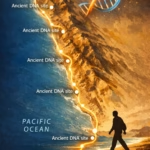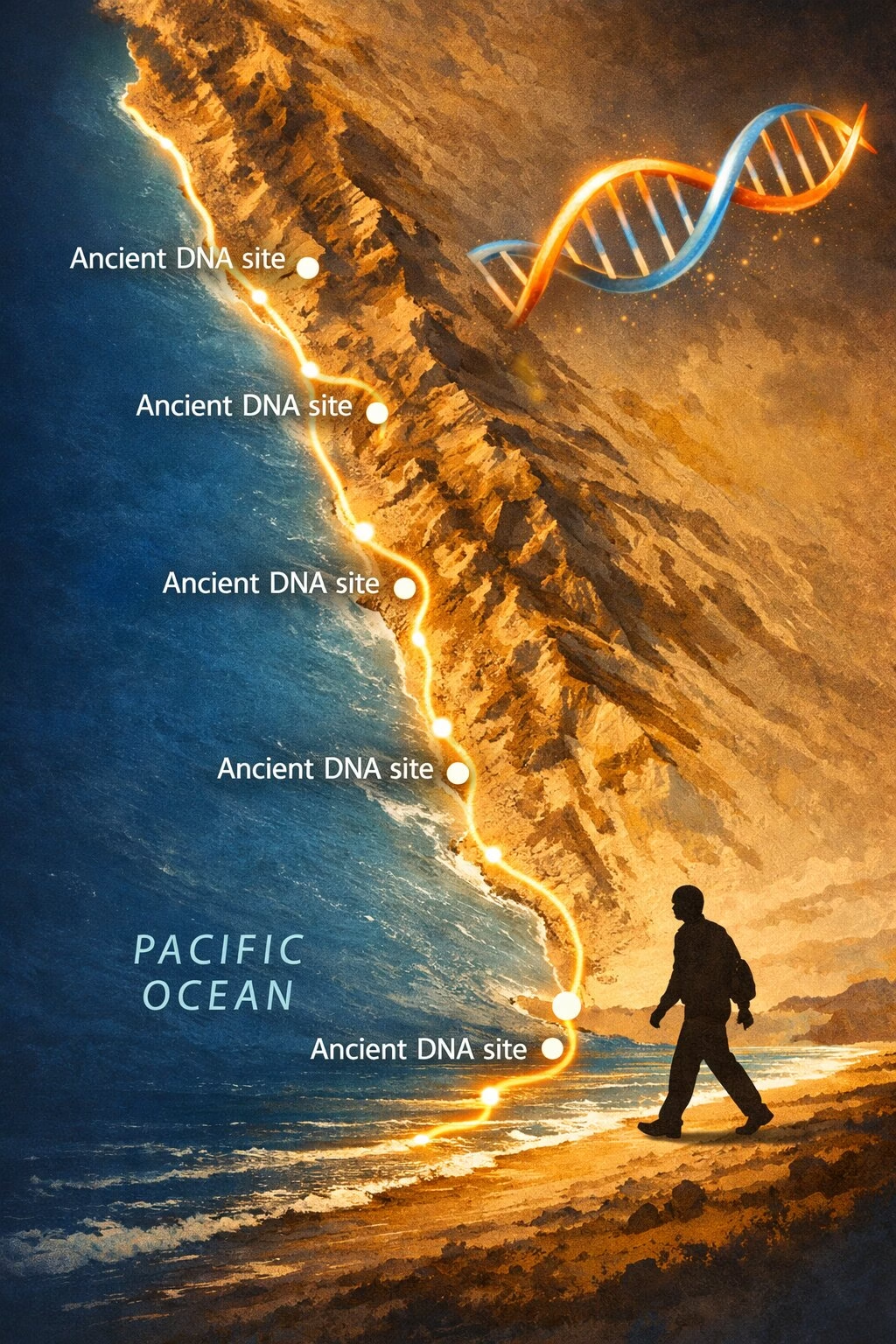
New research using ancient DNA is changing what we know about life on Peru’s coast long before the Inca Empire. Scientists studied DNA from human remains found at several coastal sites, and they combined these data with radiocarbon dating and chemical analysis of teeth and bones to learn how people moved and lived. The results show that individuals traveled at least 400 miles (about 640 km) along the coast, yet most people kept the same local ancestry and cultural identity over many generations.
The genetic evidence reveals clear regional differences, which means communities in different coastal areas remained distinct. At the same time, some skeletons were buried far from their genetic homelands, showing that people did travel or live away from home for periods. Archaeological clues such as nonlocal artifacts and isotope signals in teeth and bones often support these cases of mobility. Together, these lines of evidence suggest that travel was common, but it did not usually lead to quick genetic mixing or the loss of local identity.
This discovery matters because it shows that long distance movement existed well before the Inca and that mobility and identity could coexist. People may have traveled for trade, seasonal work, rituals, or family ties and then returned home. Social systems like strong kinship networks, marriage rules, or community practices likely helped people keep their local identities even after long journeys. The findings challenge the assumption that travel automatically causes cultural or genetic assimilation and highlight the complexity of pre Inca coastal societies.
Seeing the Pacific coast of Peru as a connected landscape helps us imagine towns and peoples linked by travel and exchange but still rooted in local traditions. The study opens new questions about how language, rituals, and daily life spread along the coast, and how coastal networks may have connected with inland regions.
The original article has been published in Nature communication, where Jordan Dalton, who co-led the Nature Communications study, said details like these helped the research take on a more human dimension. “It’s striking to realize that such an intense, personal event as childbirth can leave traces in bone,” Dalton told Discover. The objects buried with the deceased weren’t just practical items; they were symbolic tokens that reflected who the person had been in life. Using ancient DNA alongside archaeological evidence, the team showed that people from Peru’s north coast were present in the Chincha Valley by the 13th century almost 800 years ago pushing back timelines for coastal migration by several centuries.